
Understanding Volatility in Slot Simulators: A Logic-Based Approach
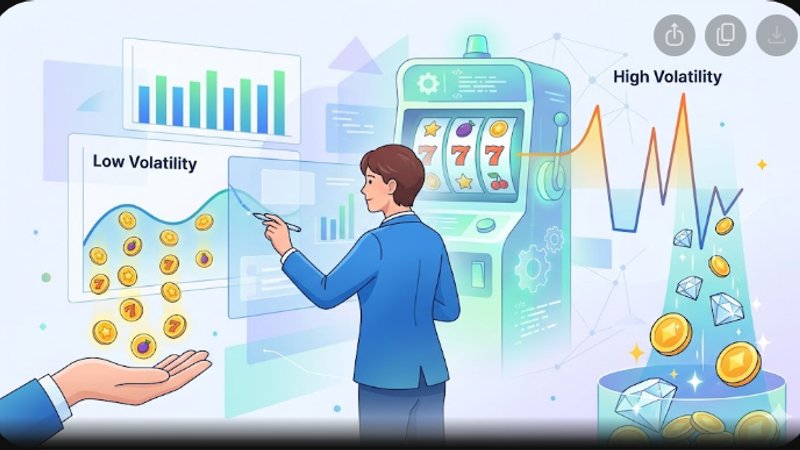
While high-stakes poker is a game of skill and psychology, slot machine simulators are driven by mathematical probability. One of the most misunderstood concepts in this niche is 'volatility' (also known as variance). In our opinion, understanding this is key to managing your expectations.
Before proceeding, it is vital to state that there is no such thing as a winning strategy for slots. These games use Random Number Generators (RNG) to ensure that every spin is independent of the last. No pattern or timing trick could potentially influence the outcome.
Low Volatility: Frequent, Smaller Returns
Low volatility slots are designed to provide more frequent wins, although the amounts are typically smaller. According to our methodology, these games may be more suitable for players who wish to extend their playtime. You might find yourself hitting small wins often, which could sustain your balance longer, but the chance of a massive payout is generally lower.
High Volatility: Rare, Larger Returns
High volatility slots are the opposite. They may go for long periods without any payout at all, but when a win does occur, it could be significantly larger. This is the 'high-risk, high-reward' model. For a player, this means you could potentially deplete your balance quickly, or you could hit a significant multiplier.
- Low Volatility: Lower risk of rapid loss, lower potential for huge wins.
- Medium Volatility: A balanced approach between frequency and size.
- High Volatility: Higher risk of rapid loss, higher potential for significant payouts.
How to Choose Based on Your Goals
If your goal is simply to enjoy the graphics and themes of a simulator, low volatility games may provide a more consistent experience. However, if you are looking for the thrill of a potential big hit, high volatility games may be more appealing. In our opinion, the choice should depend entirely on your personal tolerance for risk.
Regardless of the volatility, the house edge always exists. This means that over a long enough timeline, the simulator is mathematically designed to keep a percentage of the wagers. This is why we insist on the importance of responsible gambling. Please play within your limits and never wager money that you cannot afford to lose.
For those who find themselves chasing losses—especially in high-volatility games—we suggest reaching out to support networks like BeGambleAware, which provide confidential help and guidance.